TL;DR
Problem: An electrician, a neighbor, or an online forum told you that your 100-amp panel is too small for a Level 2 EV charger, and that a full service upgrade is your only option. For many Orlando homes, that answer is given without anyone doing the actual math.
Solution: A formal load calculation under NEC Article 220 decides whether a charger fits. When the numbers are close, load management — a system that watches your home's total electrical use and slows or pauses charging when the house needs the power — can make the charger legal and safe on the panel you already have. The National Electrical Code recognizes this approach in Section 220.70.
When to call: If you want the calculation run on your actual home instead of a guess based on your panel label: Call Now
Quick Answer
Most homes told they need a panel upgrade actually have three cheaper, legal paths to consider first, and the load calculation is what decides between them. You can commission the charger at a lower current setting, you can add load management so the charger shares capacity with the rest of the house, or you can add a subpanel if the problem is breaker space rather than total capacity. A service upgrade is the fourth option, and it is the right answer only when the calculation shows the home is already using nearly all of its service, even after those options are considered. This guide explains each path in plain language, shows how the calculation works step by step, and covers the breaker and wire sizes a 48-amp charger needs. For the broader picture on Level 2 EV charger installation, start there and come back here for the panel math.
What Is Load Management for EV Charging?
Load management is a control system that keeps your home's total electrical draw below a set limit by adjusting how fast your car charges. Instead of assuming the charger runs at full power at the worst possible moment, the system measures what the house is actually using, in real time, and gives the charger only the capacity that is left over.
There are two common forms of it in homes today.
The first is a standalone energy management system, often called an EMS. A small control box is installed near your panel, and two sensor clamps, called current transformers or CT clamps, fit around the main wires that feed your home. Those clamps measure total household current every second. If your air conditioner, dryer, range, and water heater are all running and the total approaches your service limit, the EMS tells the charger to slow down or pause. When a big load turns off — usually within minutes — charging speeds back up on its own. You do not manage this yourself. There is no app to watch and no switch to flip before you cook dinner.
The second form is built into smart chargers themselves. Some chargers can be paired with an external meter or CT sensor and do the same throttling internally. Others offer power sharing, which matters most with two electric cars: two chargers on one circuit communicate with each other and split the available current, so both cars charge overnight without a second large circuit. Power sharing between chargers and whole-home load management solve related problems, but they are not identical. Power sharing divides a set amount between cars. Whole-home load management protects the main service itself.
This is not a workaround or a loophole. NEC Section 220.70 addresses energy management systems directly. In plain English, it says this: if a listed energy management system is set to control the maximum electrical demand of your home, and it cannot be set above a safe limit, then your load calculation can use that controlled limit instead of adding up every load as if it all ran at full power at the same time. That single section is why a charger that fails a standard calculation on paper can pass the same calculation once load management is part of the design. The system itself becomes part of the math, because it physically prevents the overload the calculation is trying to avoid.
One limit deserves to be said clearly. Load management does not create new capacity, and it does not fix an unsafe panel. If a panel is damaged, corroded, recalled, or so overloaded that even a controlled charger leaves no safe margin, an electrician should tell you that plainly. Load management is for homes that are close on capacity, not for homes with a separate safety problem.

How Does a Home Load Calculation Work, Step by Step?

A load calculation is the standardized method in NEC Article 220 that an electrician uses to estimate your home's peak electrical demand. It is not a meter reading of what you used last Tuesday, and it is not a guess from the size of your main breaker. It is a worksheet, with set values and set rules, that produces a total in volt-amps, which is then converted to amps at 240 volts. Here is the standard method, simplified into plain steps.
Step 1: Start with the general lighting load, based on square footage. The code assigns 3 volt-amps for every square foot of living space. This covers lights and general-use outlets. A 1,800 square foot home starts at 5,400 volt-amps for this line alone, whether it has many lamps or few. The code uses a standard value so every electrician starts from the same place.
Step 2: Add the required small-appliance and laundry circuits. A home gets two small-appliance branch circuits for the kitchen, counted at 1,500 volt-amps each, plus one laundry circuit at 1,500 volt-amps. For that same 1,800 square foot home, this step adds 4,500 volt-amps, bringing the general subtotal to 9,900 volt-amps.
Step 3: Apply the demand factor to the general load. This is the step most people miss. The code knows that not every light and outlet runs at once, so only the first 3,000 volt-amps of the general load count at full value. The rest counts at 35 percent. For our example, 3,000 plus 35 percent of the remaining 6,900 gives a general demand of 5,415 volt-amps. That reduction is built into the code on purpose. It is one reason a real calculation often comes out lower than a homeowner's rough addition of every breaker in the panel.
Step 4: Add fixed appliances at nameplate value, with a demand factor when there are four or more. The electrician reads the nameplate ratings on the water heater, dishwasher, garbage disposal, and similar fixed appliances. An electric water heater is often around 4,500 volt-amps. A dishwasher may be around 1,200 volt-amps. If a home has four or more qualifying fixed appliances, the code allows a 75 percent demand factor on that group, again because they do not all run together. Kitchen ranges and dryers are handled on their own lines. A clothes dryer is counted at 5,000 volt-amps or its nameplate rating, whichever is larger. A large range is reduced by its own demand factor, so a range with a 12,000 volt-amp nameplate is commonly counted at 8,000 volt-amps in the calculation.
Step 5: Add heating and air conditioning at full load, using the larger of the two. Heating and cooling do not get a demand discount, because the code assumes the system can run at full draw for long periods. You count the larger of the heating load or the air conditioning load, not both together, since a home is not heating and cooling at the same time. In Orlando, this line is usually the air conditioner, and it is often the single largest load in the entire worksheet. If a home has electric heat strips larger than its air conditioner, the heat number controls instead.
Step 6: Add 25 percent of the largest motor load. Motors draw extra current when they start. The code accounts for this by adding 25 percent of the largest motor load in the home, which is usually the air conditioner compressor that was already counted in Step 5. It is a small line, but a complete calculation includes it.
Step 7: Add the EV charger at its full charging current, then compare the total to your service size. Electric vehicle charging counts as a continuous load. It gets no demand discount in a one-charger home calculation. A charger set to deliver 40 amps counts as 9,600 volt-amps. A charger set to deliver 48 amps counts as 11,520 volt-amps. If the final total stays at or below your service capacity — 24,000 volt-amps for a 100-amp service — the charger fits. If it goes over, you move to the options in the next sections, including the controlled limit that Section 220.70 allows when load management is installed.
What Does a Worked Example Look Like for a Typical 100-Amp Orlando Home?

Take an example home, not a real customer home: 1,800 square feet in Orlando, 100-amp service, central air conditioning, an electric water heater, an electric dryer, and an electric range. Following the steps above, the general load with its demand factor comes to 5,415 volt-amps. The water heater and other fixed appliances, after their demand factor, add roughly 4,300 volt-amps. The dryer adds 5,000 volt-amps on its own line, but the range line and the dryer line interact with further code rules in a full worksheet, and the air conditioner, as the largest heating or cooling load, adds about 5,000 volt-amps at full value, plus a motor addition of about 1,250 volt-amps. When a licensed electrician completes the full worksheet for a home like this, a total existing demand in the range of 13,500 to 14,500 volt-amps — roughly 56 to 60 amps — is a common outcome. Your home will differ, which is exactly why the worksheet is done house by house.
Now add the charger. At a 40-amp charging setting, the charger adds 9,600 volt-amps. Against an existing demand of about 13,800 volt-amps, the new total is about 23,400 volt-amps, or about 98 amps. That fits a 100-amp service, with little room to spare. At a 48-amp charging setting, the charger adds 11,520 volt-amps, and the same home reaches about 25,300 volt-amps, or about 105 amps. That does not fit.
That five-amp gap is the whole story of this guide. The same house, the same panel, and the same charger can pass at one setting and fail at another. And when the 48-amp setting fails, load management can bring it back into compliance by capping the combined total at a set limit, so the charger automatically slows during the rare moments the house peaks and runs at full speed the rest of the night. If your starting point is our companion guide on whether a Level 2 charger works on a 100-amp panel, this worked example is the math behind its answer.
What Breaker and Wire Size Does a 48-Amp Home Charger Need?
A 48-amp charger needs a 60-amp breaker and wire rated to carry that circuit safely. The reason is the continuous load rule. Because an EV charger can run at full current for three hours or more, the code treats it as a continuous load, and the circuit must be sized at 125 percent of the charging current. Forty-eight amps multiplied by 125 percent equals 60 amps. That is why you will never see a 48-amp charger correctly installed on a 50-amp breaker, even though 48 is less than 50. The breaker protects the wire, and the wire must be sized for 60 amps.
For the wire itself, the most common correct choice is 6 AWG copper THHN conductors pulled in conduit. THHN is rated by the temperature column your equipment terminations allow, which for most modern breakers and chargers is the 75-degree column. In that column, 6 AWG copper is rated for 65 amps, which clears the 60-amp requirement. This is the setup most electricians use for a hardwired 48-amp installation.
Cable assemblies follow a stricter rule, and this is where do-it-yourself research often goes wrong. NM-B cable, the sheathed cable many people call by a common brand name, must be sized from the 60-degree column, no matter what the individual conductors inside could handle at a higher temperature. In the 60-degree column, 6 AWG copper is rated for only 55 amps. That is not enough for a 60-amp circuit. So if the run is made with NM-B cable instead of individual THHN conductors in conduit, the cable must be upsized to 4 AWG copper. Same charger, same breaker, different wire product, different required size.
A few related points keep this in perspective. If your charger is commissioned at 40 amps instead of 48, the circuit is a 50-amp circuit, and the wire options change with it. If it is set to 32 amps, the circuit is 40 amps. The breaker and wire always follow the setting the charger is actually commissioned at, not the highest number printed on the box. Wire length, conduit fill, and ambient heat can also require a larger conductor in some runs, which is another reason sizing is part of the installation design and not just a table lookup. Our full breaker and wire size guide walks through every common charger setting in one table, so use it as the reference and use this section as the 48-amp answer.
What Are Your Four Options If the Calculation Is Tight?
When a load calculation comes back over the limit, a good electrician does not jump straight to the largest job. There are four honest paths, and they differ a lot in scope, disruption, and cost. Here they are in the order they are usually considered.
Option 1: Derate the charger setting. Derating simply means commissioning the charger at a lower current than its maximum. A charger capable of 48 amps can be set during installation to 40, 32, or even 24 amps, and the breaker and wire are then sized to that setting. This is the simplest path. It usually adds no hardware cost at all, because the adjustment is a setting in the charger itself, made by the installer. There is no extra disruption beyond the normal installation visit. The trade-off is charging speed. A car charging at 32 amps still gains far more range per hour than it would on a standard wall outlet, and for a typical commute it finishes well before morning. Derating is the honest answer when the calculation misses by a small margin, when you drive a modest number of miles a day, or when you would rather keep the project simple today and revisit it later. It is the wrong answer only if you genuinely need the fastest possible turnaround between drives, every single day.
Option 2: Add load management. This is the path this guide is built around. A load management system, as described above, watches total household demand and adjusts charging to stay under a set cap. The scope is moderate: the charger circuit is installed as normal, the control unit and CT clamps are added at the panel, and the system is configured and tested. Disruption is low — power is off briefly during the panel work, and there is no utility involvement. On cost, load management hardware usually runs a few hundred dollars, plus the install labor to fit and configure it. That total is far below a service upgrade in most cases. Load management is the honest answer when your calculation is over by a modest amount, when you want full 48-amp charging speed most of the time, or when your heavy loads run at predictable times and your car charges overnight. It is also the natural answer for a future second EV, since power sharing can be added to the same thinking.
Option 3: Add a subpanel. A subpanel solves a different problem. If your load calculation passes but your main panel has no open breaker spaces left, a subpanel adds physical room for the new double-pole breaker without replacing your service. An electrician installs a smaller panel next to the main one, feeds it from a breaker in the main panel, and moves or adds circuits as needed. The scope sits in the middle: more panel work than load management, well short of a service change, with power off for a portion of the work. Cost is likewise in the middle and depends mostly on distance and how many circuits move. The critical point is that a subpanel does not add capacity. If your calculation fails on total load, a subpanel alone does not fix it, and any installer who suggests one for a capacity problem should be asked to show the math. A subpanel is the honest answer when the worksheet fits and only the spaces are gone. For the full range of panel work, see our electrical panel upgrade page for EV chargers.
Option 4: Upgrade the service. Sometimes the first three options are not enough. If the home is all-electric, the existing demand is already high, a pool or workshop adds further load, and you want full-speed charging with room for a second car and future projects, then upgrading from 100-amp to 200-amp service is the correct recommendation. Be clear about what it involves: a new panel, often a new meter base and service conductors, coordination with your utility, a permit and inspection, and power off for a large part of a day while the changeover happens. It is the most disruptive option and the most expensive. Nationally, a service upgrade commonly runs from 2,000 to 5,000 dollars, before the charger circuit itself, with the final figure driven by your utility's requirements, the distance of the service run, and local permit conditions. It is the honest answer when the numbers truly demand it, or when you are already planning other major electrical work and want to do the panel once. It is not the honest first answer for a home that misses the calculation by five amps.
Notice what this fork means for comparing quotes. Two quotes for the same house can differ by thousands of dollars because they are not quoting the same path. One installer may have priced a full service upgrade while another priced a derated charger or a load-managed installation. Neither number tells you much until you know which path each quote assumes, and which one your load calculation actually requires. Ask each installer to name the path and show the worksheet. That one question resolves most quote confusion.
Which Charger Should an Electrician Install on a 100-Amp Service?
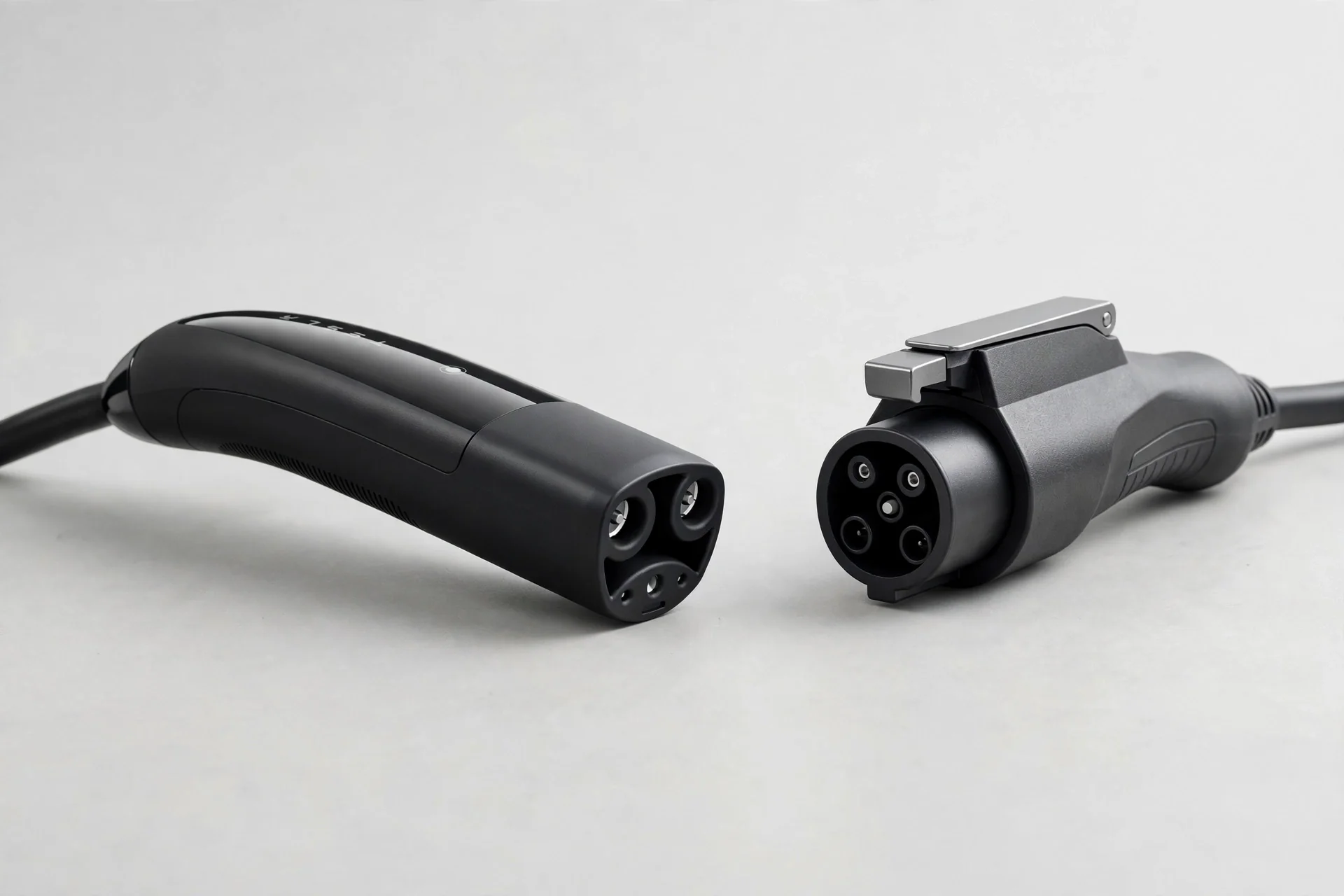
The short answer is: install a charger that can be commissioned at a lower current, or paired with load management, rather than a fixed-output unit that only runs at one high setting. Adjustability is the feature that matters most on a 100-amp service, because it is what lets the electrician match the charger to your calculation instead of forcing your panel to match the charger.
The Tesla Wall Connector is a common example. It can be commissioned across a range of current settings, so the same unit can be installed on a smaller circuit today and set higher later if you upgrade your service. It also supports power sharing between multiple Wall Connectors, which matters for two-car homes. The ChargePoint Home Flex is the other unit homeowners ask about most often in this situation. It is likewise adjustable across a wide range of settings, which is exactly why it appears in so many 100-amp discussions. Other adjustable units from other makers can serve the same role. The brand matters less than the commissioning range and whether the unit can work with an external load management system if your home needs one.
What you should not do is buy a fixed 48-amp charger first and then ask an electrician to make it fit. On a tight panel, the equipment choice and the calculation have to be made together, in that order: calculation first, charger second. If you are weighing the two most-asked-about models directly against each other, our full comparison of the Tesla Wall Connector vs ChargePoint covers their specs, apps, and fit for different homes in detail. This guide deliberately does not repeat that comparison. Its point is narrower: whichever model you choose, choose the version of the installation that your panel can legally support.
Load Management vs. Panel Upgrade — How Do You Decide?

Start with the worksheet, not with a preference. If the calculation fits at the charger setting you want, you need neither option. If it fits only at a lower setting, decide whether that setting meets your driving needs. For most commuters it does, and the decision ends there at no added cost.
If it does not fit at any setting you are happy with, compare the size of the gap. A gap of roughly 5 to 20 amps is load management territory. The system covers a gap that size comfortably, and you keep full charging speed during the hours your house is quiet. A gap far larger than that, or a home where heavy loads run through the night as well as the day, points more honestly toward a service upgrade. So does a panel that needs replacement for age or safety reasons on its own. Replacing a problem panel and solving EV capacity in the same project can be better value than managing load on a panel that should not stay in service anyway.
Your future plans belong in the decision too. A second EV, a pool heater, a workshop, or an addition all add demand that load management must also absorb. Load management handles growth gracefully up to a point, because it prioritizes the house and gives cars what is left. But if your plans will leave very little left over, most nights, for years, the upgrade becomes the better long-term buy. An electrician who asks about your next five years, not just your next car, is asking the right questions.
Orlando adds its own notes to this decision. Air conditioning is the dominant load in a Central Florida home, and it cycles hardest on summer afternoons and early evenings. EV charging, for most owners, happens overnight, when the air conditioner runs less often, the range and dryer are off, and the house is at its lowest demand of the day. That timing mismatch is why load management works so well here. The moments when the EMS needs to slow your charging are uncommon to begin with, and they are shortest during the exact hours most cars are plugged in. Homes with a pool pump scheduled overnight or electric heat strips that run on cold winter mornings are the main exceptions, and both are easy to account for in the setup.
Finally, a permit note that applies to every path in this guide. Adding load management does not remove the need for a permit. A new EV charger circuit in Orlando is permitted electrical work whether it is derated, load-managed, fed from a subpanel, or part of a service upgrade, and the load calculation or the Section 220.70 controlled-demand figure is part of what the permit review is based on. Skipping the permit to save time puts the installation outside the process that exists to check exactly this math. A proper installer handles the permit as a routine part of the job.
FAQs
What is NEC 220.70 and how does it help EV charging?
NEC Section 220.70 is the part of the National Electrical Code that covers energy management systems in load calculations. In plain English, it says that if a listed energy management system controls your home's maximum electrical demand and cannot be adjusted above a set limit, your load calculation may use that controlled limit instead of the total of every load added together. For EV charging, this matters because a charger that pushes a standard calculation over your service size can fit once a load management system caps the combined demand. The charger slows or pauses automatically at peak moments, so the overload the calculation guards against cannot happen.
What breaker and wire size does a 48-amp home charger need?
It needs a 60-amp breaker, because EV charging is a continuous load and the circuit must be sized at 125 percent of 48 amps. For wire, 6 AWG copper THHN in conduit is the common choice, since it is rated for 65 amps at the 75-degree rating used for most terminations. If the run uses NM-B cable instead, the cable is limited to the 60-degree column, where 6 AWG copper is rated for only 55 amps, so the cable must be upsized to 4 AWG copper. Your electrician confirms the final size based on your run length and installation conditions.
Can load management really replace a panel upgrade?
In many borderline cases, yes. If your load calculation is over the limit by a modest amount, a load management system can bring the installation into compliance by capping total demand, which NEC 220.70 recognizes. The charger then runs at full speed whenever the house has capacity to spare, which overnight is most of the time. Load management does not replace an upgrade when the panel is unsafe, damaged, or so far over capacity that even a controlled charger leaves no workable margin. The calculation, not a sales pitch, tells you which situation you are in.
How is a home load calculation done?
An electrician works through NEC Article 220 step by step. The calculation starts with a general lighting load based on your home's square footage, adds the standard small-appliance and laundry circuits, then applies a demand factor so only part of that general load counts at full value. Fixed appliances are added at nameplate rating, with a demand factor when there are four or more. The dryer and range are added on their own lines with their own rules. Heating and air conditioning are added at full load, using the larger of the two, plus 25 percent of the largest motor load. Finally, the EV charger is added at its full set current, and the total is compared to your service size.
Will load management slow my charging down?
Sometimes, briefly, and by design. When your home's other loads peak — air conditioning, dryer, range, and water heater running together, for example — the system reduces charging current or pauses charging until demand falls. In practice, most charging happens overnight, when household demand is low, so most owners see full-speed charging for nearly the whole session. Even on a night when charging is slowed for part of the evening, a car plugged in for eight to ten hours typically has far more time than it needs to reach a full charge for the next day's driving.
Does load management need a permit in Orlando?
Yes. The EV charger circuit itself is permitted electrical work in Orlando, and adding a load management system does not change that. The permit application is supported by your load calculation or, when load management is used, by the controlled maximum demand figure under NEC 220.70. The installation is then inspected like any other charger installation. Your electrician handles the permit as part of the job, and the inspection is what confirms the system was installed and set up as designed.
Next Steps
If you have been told you need a panel upgrade, get the load calculation before you approve any large job. Read our guide to installing a Level 2 charger on a 100-amp panel for the full picture on tight panels, and our electrical panel upgrade page for what a genuine upgrade involves when the math does require one. Then have an electrician run the worksheet on your home and walk you through which of the four paths fits: Call Now